Rodent Inspection in Miami, FL
National guides put a standalone rodent inspection at 75 to 150 dollars, and that fee is the reason most people never get a second opinion. This one is free, and it ends in a written list of openings with locations so two quotes can be compared line by line.
An inspection is worth having only if it produces a document. A walk-around that ends in a verbal number tells you nothing you can check, compare, or hold anybody to later. The output here is a list: every opening found, where it is on the building, what would close it, and what condition the attic is in. That list is what makes a second bid meaningful, because both bidders are then pricing the same work rather than describing different amounts of it in the same words.
The route through the building is deliberately ordered, and it starts at the top. In Miami the animal in almost every case is the roof rat, which UF/IFAS Extension calls the worst rodent pest in Florida and the most abundant, and which enters at the roof line rather than at the ground. So the roof line gets walked first, the attic second, and the perimeter third, which is close to the reverse of how a generic national checklist runs.
What the inspection settles before anything else is what animal you have, because that decides where the money goes. Daytime activity points at squirrels, droppings well under a quarter inch point at a mouse, and banana-shaped droppings of a quarter to half an inch with rub marks along a run point at roof rats. Getting that wrong sends a crew to the wrong half of the building.
What gets walked, and in what order
The roofline comes first, and on a tile roof that means the eave line before anything else. The void under the first course of barrel tile is closed by a component with its own name, the bird stop or eave closure, typically 26 gauge galvanized steel or aluminum and sometimes supplied ventilated with weep holes. The Department of Energy lists installing bird stopping among its recommended measures for clay and concrete tile roofs. Missing, corroded or displaced closures leave a rat-sized void running the length of the eave, and that gets recorded run by run.
Then the soffit system, panel by panel, looking for panels dropped or pulled away at the fascia and at wall returns. Then roof and gable vents, checking screen condition, collar seating and any corner already opened. Then every plumbing and vent penetration through the deck, along with mechanical and electrical entries, where the original boot or sleeve has often shrunk or cracked.
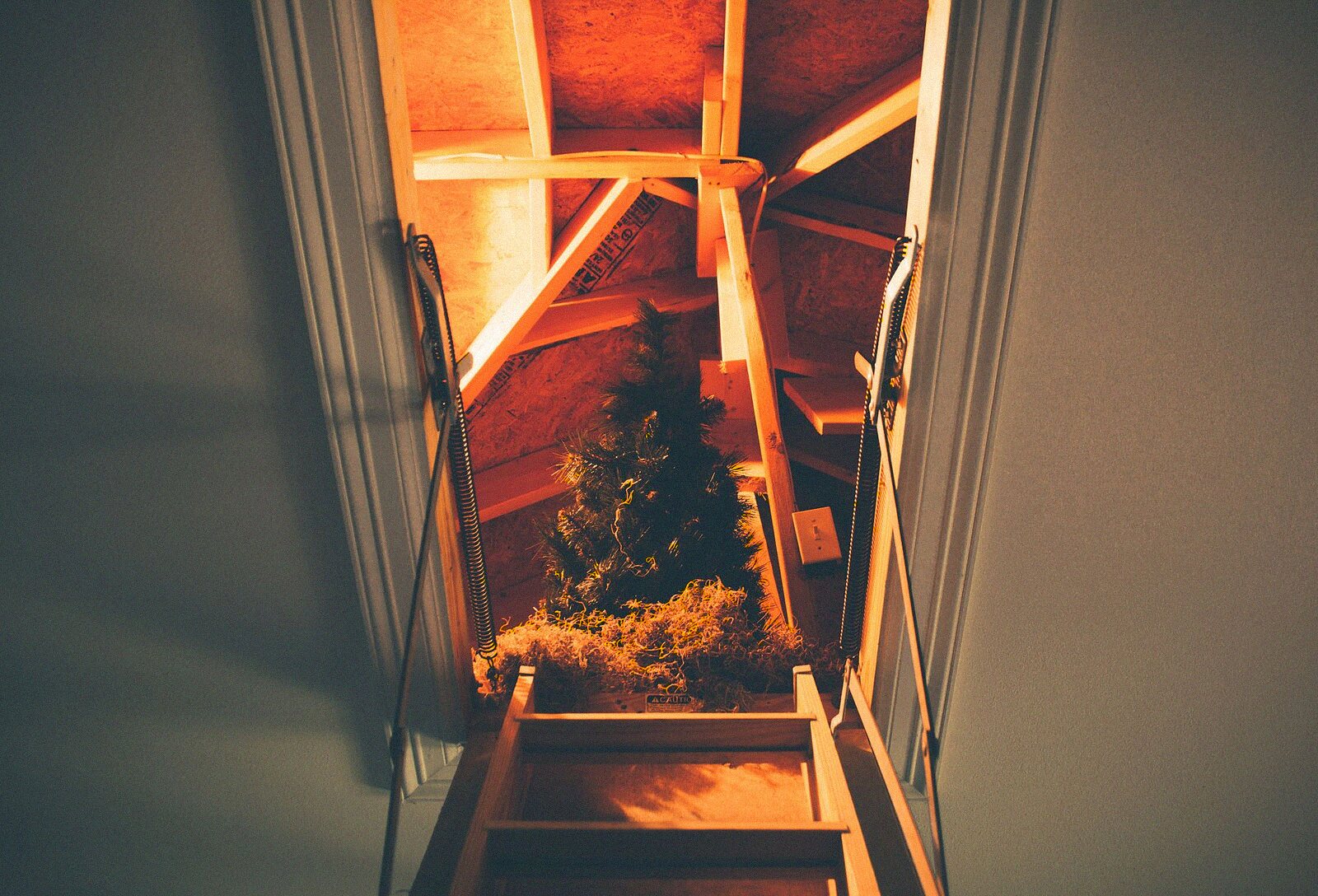
The attic interior is next, and it is where the evidence lives. Runs show as compressed channels through blown insulation. Rub marks, which UF/IFAS describes as dark smears along travel routes, show where the traffic is repeated rather than incidental. Droppings get measured and characterized against the sourced roof rat figure of a quarter to half an inch, banana shaped. Nesting material, chewed wiring and damaged duct get located, and the extent of contamination gets mapped rather than estimated. The ground-level perimeter closes the walk: garage door seals, utility penetrations through block, weep points, hose bib plates and any stored material stacked against a wall.
Attic access is the biggest hidden cost driver, and it depends on when the house was built
A pre-1940 house often has a genuinely walkable attic with a steeper roof pitch and real structural clearance. That is the best case for inspection and for the work that follows, because a technician can reach the perimeter of the attic and see the top plate all the way round. Where a house of that era has been reroofed more than once, the deck penetrations and vent collars are usually where the openings are.
A low-pitch tract house from the 1950s through the 1970s is the hardest common case. The attic is shallow, the access is a small hatch in a hallway or closet ceiling, and ductwork run through the middle of the space frequently blocks passage to half of it. Inspecting the far side of an attic like that may require working from a second access point or accepting that some of the space can be assessed only from a distance, and an honest inspection says which parts it could reach.
Houses from the 1990s onward generally have better access, with a proper pull-down or a larger framed hatch, and the constraint moves to the insulation. Dense blown insulation hides runs, hides droppings and makes footing uncertain, so the survey slows down. Mid-rise and high-rise condominiums are a different situation altogether: there is no attic belonging to the unit, only shared plenums, chases and risers, and the inspection there is about the shared pathways and the building envelope rather than about a space you own.
Why the sequence of the work matters more than any single technique
The professional consensus in this trade is exclusion-first sequencing, and it exists because of two specific failures. Trapping with nothing sealed leaves the building open, so the traps keep producing and the household ends up on a standing appointment. Sealing while animals are inside puts a dead animal in a wall or a soffit void, and reaching it means cutting a hole and paying for drywall repair that national guides put from 300 dollars into four figures.
The sequence that avoids both runs in four moves. Identify and record every opening. Close the ones with no current traffic. Trap out the animals still inside, along the runs the rub marks confirm. Close the last openings once catches have stopped and the attic has stayed quiet. Each step is checkable, which is the point.
Patience is built into the middle of it. UF/IFAS records that roof rats are nervous and cautious of new objects in their environment, and advises leaving traps in the same location for at least a week before moving them, with sets worked dusk to dawn because the animals are nocturnal. A trap line that gets rearranged every second day is being managed against the animal rather than with it, and it stretches a job that should be measured in weeks.
What makes a written scope comparable between two quotes
Four things, and all four are absent from most quotes in this market. First, a list of openings by location rather than a phrase about sealing the property. Second, the material and specification going into each: UF/IFAS gives mortar, concrete, sheet metal, or hardware cloth of 19 gauge or heavier with no opening larger than a quarter inch, and half an inch as the gap a rat can pass. Those are numbers that can be verified on the finished work with a tape measure.
Third, separate line items. Trapping, sealing, cleanup, insulation and any ongoing plan should each carry their own price. Homeowners comparing bids for work described in identical language routinely find the numbers vary by multiples, and the reason is almost always that one quote includes sealing and cleanup that the other quietly omits. A bundled figure cannot be compared with anything.
Fourth, the follow-up terms in writing: how many return visits are included, what triggers another, and what happens if activity resumes. Ask those questions of both bidders and the cheaper quote often turns out to be the more expensive one. This site does not offer or imply any warranty on sealing work, and a claim of one from any bidder should be read carefully for its actual terms rather than accepted as a headline.
Check the Likely Way In
The openings that matter on a South Florida building are not the ones most homeowners check. Answer four questions and this will tell you where to look first from the ground.
What does a rodent inspection actually cost?
Priced on its own, national cost guides put a rodent inspection at 75 to 150 dollars, and a broader range up to around 200 dollars appears where the visit includes a fuller assessment. Some companies credit the fee against the job if the work proceeds, and some do not, which is worth asking before booking anything.
That fee is a real barrier and it distorts the market. Homeowners are advised on all sides to get multiple bids for identical scope, and then discover that three bids cost a couple of hundred dollars before any work starts. The result is that most people get one quote, cannot judge it, and accept or refuse it on instinct. Removing the fee is what makes the comparison possible.
The figures that follow a free inspection still come from somewhere, and this site labels them. There is no Miami rat exterminator cost page from any national aggregator. Tampa is the only Florida metro with one, and it is used here as the nearest same-state, same-climate proxy and printed as Tampa data. Everything else is national guide data and is labeled national.
What happens to the findings after the visit?
The list of openings and the attic assessment go to you in writing, with the locations described well enough that another company could walk to each one. That is what makes it useful as a comparison document rather than as a sales tool, and it is also what lets you decide to do part of the work now and part later with a clear picture of what is being deferred.
Contamination gets described by extent rather than by adjective. Which bays are affected, whether insulation is compressed or soiled, and whether duct or wiring shows damage. The Department of Energy states that compressed insulation does not deliver its full rated R-value and that wet insulation performs poorly, which is the mechanism behind an insulation recommendation. No percentage figure gets attached to it, because none is available for this case.
The credential side is checkable too. Rodent work in Florida sits in the FDACS certification category General Household Pest and Rodent Control, a licensed pest control business location must employ a Florida-certified operator in charge, and it must carry bodily injury insurance of 250,000 dollars per person and 500,000 dollars per occurrence. FDACS runs a public licensing portal, and looking up the business name you were given takes about a minute.
Local conditions the inspection is looking for
Trees and palms, because they are the access route. UF/IFAS describes roof rats as arboreal and similar to squirrels in moving through trees and along vines and wires, using utility lines and branches to reach buildings, and records nesting in the skirts of old fronds on palm trees. It advises isolating trees from fences, overhead wires and other trees. Limbs over the roof and heavy palm skirts get noted as part of the survey.
Storm damage at the roof, because it opens the envelope. Department of Energy guidance on tile roofs describes clay or concrete tiles being damaged or blown off during hurricanes, tornadoes, high winds or hail, exposing underlayment, flashing and sheathing, and notes that a broken tile can send debris into other tiles in a progressive cascading failure. An opened tile field is an opened roof edge, and that is where the survey pays attention after a storm season.
Water, because the CDC connects it to rodents directly. CDC states that leptospirosis cases can increase after hurricanes or floods, names rodents among the animals that spread it, describes animal urine in soil running into floodwater during heavy rain, and recommends preventing rodent infestation as part of post-flood precautions. That is the accurate storm and rodent connection, and it needs no invented figures to be worth acting on.
How the Free Inspection Runs
One visit, a fixed route through the building, and a written output. Nothing is priced until the list of openings exists.
- 1
What you report first
Where the noise is, what time of day it happens, how long it has been going on, and where droppings are appearing. Daytime activity points at squirrels while rats and mice are nocturnal, so the hour alone narrows the species before anyone arrives.
- 2
The roof line
Tile eave and bird stop condition run by run, soffit panels at the fascia and at wall returns, roof and gable vents including screen and collar condition, and every plumbing, mechanical and electrical penetration through the deck. Each opening is recorded with its location.
- 3
The attic interior
Runs through the insulation, rub marks along travel routes, droppings measured against the sourced quarter to half inch banana-shaped roof rat figure, nesting material, chewed wiring and duct, and the extent of contamination by bay. Where access limits what can be reached, the report says so.
- 4
The perimeter
Garage door seals, utility penetrations through block, weep points, hose bib plates, dryer vent dampers, and stored material stacked against walls. Trees, palm skirts and fence or wire routes to the roof edge are recorded as access rather than as entry.
- 5
The written list
Every opening with its location, the closure proposed for each, the attic condition, and separate line items for trapping, sealing, cleanup and insulation. That document is yours to take to another bidder.
What This Inspection Produces
A document, and no fee for it
National cost guides put a standalone rodent inspection at 75 to 150 dollars, and that fee is why most households get one quote instead of three. Removing it makes the comparison people are universally advised to do actually possible. The output is a written list of openings with locations, closure specifications and separate line items, which is a document another company can price against.
A specification anybody can check
UF/IFAS gives a quarter of an inch as the opening a mouse can pass and half an inch for a rat, sets a quarter inch as the rat-proofing standard, and names mortar, concrete, sheet metal and hardware cloth of 19 gauge or heavier as the closure materials. A scope that names those can be inspected afterward with a tape measure and a flashlight.
An honest account of what could not be reached
Attic access varies enormously by era, and a shallow 1960s attic crossed by ductwork cannot always be walked to the perimeter. The report says which parts of the space were reached and which were assessed at a distance, because a scope built on an attic nobody actually crossed will be revised later at your expense.
Book the Inspection
One visit, the full route from roof line to perimeter, and a written list of openings at the end of it. There is no charge and no obligation to go ahead.
What an Inspection Costs, and What Follows It
The inspection is free. Priced on its own, national cost guides put a rodent inspection at 75 to 150 dollars, sometimes credited against the job. The work that follows is quoted from the written list, and the ranges below are labeled by origin: Tampa is the nearest Florida market with published rat exterminator figures, and everything else is national guide data.
| Service | Typical range | What moves the number |
|---|---|---|
| Rodent inspection | Free | Priced alone nationally at $75 to $200; this one produces a written list of openings at no charge |
| Trapping and removal | $440 to $1,720 | Nearest Florida market figures (Tampa); home size, duration and number of active runs |
| Full-home exclusion sealing | $550 to $1,650 | Nearest Florida market figures (Tampa); roof type, tile eave length and number of openings |
| Attic cleanup and decontamination | $600 to $1,000 | National guide figure; attic size, access and how far contamination has spread |
| Insulation removal and replacement | $2 to $6 per sq ft | National guide figure, after sanitizing; heavy contamination goes considerably above this |
Tampa is cited because it is the only Florida metro with a published rat exterminator cost page, and it is printed here as Tampa data rather than as a Miami figure. No national aggregator publishes Miami rodent costs. The written list from the inspection produces the actual figure for your property, with each part of the job priced as its own line.
What Reddit Says About Rodent Inspection in Miami
The inspection fee comes up as a genuine obstacle. People are told from every direction to get multiple bids on identical scope, and then find that each bid costs around 75 dollars to obtain, so most households get one quote and have no basis for judging it. The threads are full of the consequence: quotes for work described in the same words that differ by multiples, and the recurring question of whether the person asking is being taken advantage of.
What they tell each other to demand from an inspection is specific. An itemized quote that separates trapping, sealing, cleanup and any ongoing plan. A clear answer on whether the company performs the repair work or subcontracts it. The number of follow-up visits included in the price. And a straight account of how long the job will take, because the corpus is full of multi-month timelines nobody was warned about. Companies that keep returning for months with no change in results are a repeated warning.
The red flags are consistent as well: poison-only plans with no sealing, sealing carried out while animals are still inside, trapping with no sealing at all, and long monitoring contracts folded into a removal price. Every one of those is a sequencing question, which is exactly what a written list of openings makes visible before any money is spent.
A Typical Inspection Visit
A common call from a 1960s low-pitch house with a hatch in the hall closet
The situation. Scratching overhead at night for a month, worst above the front bedroom, and droppings on a shelf in the garage. Two previous companies quoted over the phone without going into the attic, and the two numbers were nowhere near each other.
What gets done. The roof line walk records two open bird stop voids at the front eave, a lifted soffit panel at the carport return, and a torn screen on the off-ridge vent. The attic is entered through the closet hatch; ductwork blocks the run to the rear third, which the report says plainly. Runs and rub marks in the front third confirm the traffic, and the garage door seal is torn at one corner.
How it turns out. The household gets a written list of five openings with locations, a closure named for each, and separate prices for trapping, sealing and the affected insulation. They take it to a third company, get a comparable bid for the first time, and choose knowing what both numbers actually cover.
Inspection Questions
What should I have ready before the inspection?
Three things help more than anything else. When you hear activity, by hour, since daylight noise points at squirrels while rats and mice are nocturnal. Where droppings are appearing, and a photograph of them next to something for scale if they have been cleaned up, because the sourced roof rat figure is a quarter to half an inch, banana shaped with pointed ends. And where the attic access is, along with anything you know about recent roof work, since reroofing and storm repairs are common sources of the openings that matter.
Do you have to go into the attic?
Wherever access allows, yes, because the evidence that determines the scope is inside it. Runs compressed through insulation, rub marks along travel routes, dropping concentrations and the extent of contamination cannot be judged from a ladder at the hatch. Where a shallow attic or ductwork blocks part of the space, that limit gets written into the report rather than glossed over. Two quotes given without anyone entering the attic are two guesses, and they usually look nothing like each other.
Is it safe to seal before trapping?
Sealing the openings that show no current traffic is safe and it is the correct first move. Sealing every opening, including the active runs, while animals are inside is where it goes wrong, because the animals die in a wall or a soffit void and reaching them means cutting the ceiling. National guides put drywall repair from 300 dollars into four figures. The order that works is close the quiet openings, trap along the confirmed runs, then close the last openings once catches stop and the attic stays quiet.
Are there Miami-Dade rodent complaint numbers I can look at?
Not in the way there are for some other cities. New York and Chicago publish rodent complaint data from their service request systems, and no equivalent Miami-Dade rodent dataset was found. The county does run 311 and a code enforcement channel for reporting animal problems, so a complaint can be logged, but there is no published local count to compare your street against. Any Miami rodent statistic you see quoted is worth tracing to a source before you rely on it.
Will the inspection tell me whether it is rats, mice or squirrels?
That is the first thing it settles, because the answer decides where the work happens. Activity hour separates squirrels from rodents. Dropping size and shape separate mice from rats, with the sourced roof rat figure at a quarter to half an inch, banana shaped. Height and location of the runs separate a roof line problem from a ground-level one. In Miami the answer is usually roof rats, which UF/IFAS calls the worst rodent pest in Florida and the most abundant, and the plan then concentrates on the roof line.
Do I have to use whoever inspects?
No. The written list of openings is yours to take anywhere, and the point of producing it is that another company can price against the same document. That is the comparison homeowners are advised to make and rarely can, because inspection fees stop them at the first bid. If a second bid comes back lower for the identical list of openings and the same closure specifications, that is useful information and you should act on it.
Related Services
Rodent Exclusion
Sealing every entry point so the problem ends instead of repeating.
Read more →Attic Cleanup & Decontamination
Droppings, nesting material and contamination removed and the space sanitized.
Read more →Attic Insulation Replacement
Removing insulation rodents ruined and restoring the R-value you paid for.
Read more →More about how this works on the about page, or get in touch to book a free inspection.
Book the Free Rodent Inspection
One visit covering the roof line, the attic and the perimeter, ending in a written list of openings you can take to any other bidder. The phone is answered 24 hours a day.